Decoding the Allure of the Forbidden Fruit Movie: From Pious Escapes to Witchy Rituals
The concept of "forbidden fruit" has captivated humanity for millennia, symbolizing temptation, rebellion, and the tantalizing allure of the unknown. In cinema, this potent metaphor blossoms into diverse narratives, offering audiences a glimpse into worlds where boundaries are tested and consequences, both liberating and dire, unfold. The evolution of the
Forbidden Fruit Movie is a fascinating journey, epitomized by two distinct films sharing a similar title but vastly different thematic landscapes: a poignant Finnish drama from 2009 and an anticipated American horror film slated for 2025/2026. This article delves into how these narratives leverage the "forbidden fruit" motif, exploring shifts in cinematic storytelling, cultural anxieties, and the enduring power of transgression.
The Original Forbidden Fruit Movie: A Finnish Drama of Faith and Freedom (2009)
The original *Forbidden Fruit Movie*, released in 2009, is a compelling Finnish drama that gently, yet powerfully, explores themes of religious dogma, burgeoning independence, and the intoxicating discovery of the secular world. Directed by Dome Karukoski, this film introduces us to Raakel (Marjut Maristo) and Maria (Amanda Pilke), two 18-year-old girls living within the strict confines of a Christian fundamentalist community. Their lives are meticulously structured, their choices limited, and the outside world is viewed with suspicion and fear.
Their summer job in a bustling city becomes a transformative journey, an inadvertent bite from the metaphorical forbidden fruit. As they navigate unfamiliar urban landscapes, new social circles, and the temptations of modern life – from fashion and music to burgeoning romantic interests – their tightly held beliefs are challenged. The film masterfully portrays their internal conflicts and the growing chasm between their upbringing and their dawning self-awareness. It's a story of awakening, of questioning preordained paths, and the often-painful process of forging one's own identity.
Starring Marjut Maristo, Amanda Pilke, and Malla Malmivaara (as Eeva), the film offers nuanced performances that capture the innocence, curiosity, and vulnerability of youth grappling with profound societal and personal change. The cinematography by Tuomo Hutri, combined with the screenplay by Aleksi Bardy, creates a sensitive portrayal of their emotional landscape. Though categorized as a Comedy and Drama, its humor often arises from the girls' naive encounters with urban life, subtly underscoring the deeper dramatic tension of their ideological clash. *Forbidden Fruit Movie* (2009) is a timeless tale about breaking free, illustrating that the most potent forbidden fruit is often knowledge and self-determination. It reminds us that sometimes, the greatest rebellion is simply daring to explore who you are outside the dictates of others.
Unveiling "Forbidden Fruits": A Modern Witchy Femme Cult Horror (Expected 2025/2026)
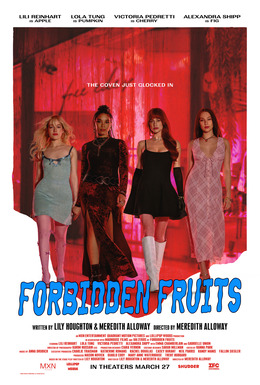
Fast forward over a decade, and the "forbidden fruit" concept is re-envisioned with a decidedly darker, more contemporary edge in the upcoming American horror film, *Forbidden Fruits*. This highly anticipated movie shifts gears entirely, swapping fundamentalist communities for mall culture and spiritual rebellion for occult empowerment. Directed by Meredith Alloway, making her feature-length debut, and co-written with Lily Houghton, *Forbidden Fruits* is generating significant buzz, partly due to its stellar cast and intriguing premise.
The film's plot synopsis plunges us into a world of secret sisterhood and sinister rituals. At a seemingly innocuous mall store called Free Eden, employee Apple (Lili Reinhart) secretly orchestrates a powerful witchy femme cult in the basement after hours. Her coven includes fellow "fruits" Cherry (Victoria Pedretti) and Fig (Alexandra Shipp). The arrival of new hire Pumpkin (Lola Tung) disrupts their established dynamic, as she begins to question the performative nature of their sisterhood. This challenge forces the women to confront their own inner darkness and "poisons," threatening to lead them down a path of bloody, violent fates.
The cast is a formidable ensemble of rising stars and established talents, including Emma Chamberlain in her acting debut, and Gabrielle Union, who joined during principal photography in spring 2025. The film is produced by industry heavyweights like Mason Novick and Diablo Cody under the MXN Entertainment banner, lending further credibility to its potential. It's worth noting that the script for *Forbidden Fruits* gained early recognition, featuring on the Black List in 2023, an esteemed compilation of the "most liked" screenplays not yet in production. Adapted from Lily Houghton's play, "Of the Women Came the Beginning of Sin, and Through Her We All Die," the film promises a rich, layered narrative that explores themes of female power, toxic dynamics, consumerism, and the allure of forbidden rituals.
Unlike its Finnish predecessor, the forbidden fruit here is not just knowledge or freedom, but perhaps the unchecked power, dark secrets, and dangerous sisterhood that resides within the cult. It’s a bold reinterpretation that taps into modern anxieties and fascinations with the occult, female empowerment, and the darker side of human nature. For more in-depth details about the cast, plot, and production, check out
Forbidden Fruits Movie: Lili Reinhart's Witch Cult Horror Details.
The Evolution of "Forbidden Fruit" Tropes: From Spiritual Rebellion to Occult Empowerment
The juxtaposition of the 2009 *Forbidden Fruit Movie* and the upcoming *Forbidden Fruits* highlights a significant evolution in how the "forbidden fruit" trope is utilized in cinema. Both films explore transgression and its consequences, but their interpretations are worlds apart, reflecting changing societal landscapes and cinematic trends.
In the Finnish drama, the forbidden fruit is freedom from dogma, the taste of secular life, and the painful yet liberating journey of self-discovery outside a restrictive religious framework. It's about breaking free from an *imposed* innocence and embracing the complexities of the world. The narrative is one of coming-of-age, cultural clash, and the universal human desire for autonomy. The "fruit" here represents knowledge, experience, and the right to choose one's own path, even if it means defying deeply ingrained beliefs.
Conversely, *Forbidden Fruits* (2025/2026) takes the concept into the realm of horror, where the forbidden fruit is not just freedom, but potentially power, darkness, and a dangerous form of community. This film delves into the allure of the occult, the subversive nature of a secret cult operating under the guise of everyday life, and the internal poisons that can corrupt even a chosen sisterhood. The "fruit" here might be the intoxicating sense of control, the embrace of taboo practices, or the destructive consequences of female bonding pushed to its extreme. It speaks to a contemporary fascination with dark femininity, anti-establishment themes, and the psychological horror inherent in cult dynamics.
The shift from comedy-drama to psychological horror also reflects broader cinematic shifts. While the 2009 film offered a gentler, introspective look at rebellion, the upcoming film promises a visceral, thrilling exploration of forbidden power. Both, however, serve as mirrors to their respective eras, reflecting what society deems "forbidden" and how individuals interact with those boundaries. They remind us that the allure of the forbidden is timeless, continually reshaping itself to fit new contexts and anxieties. To understand this fascinating transition more deeply, consider exploring
Forbidden Fruit Movies: Finnish Drama to Witchy Horror Explained.
Why We're Drawn to "Forbidden Fruit" Narratives
Human beings possess an inherent curiosity about what is off-limits. Narratives centered around "forbidden fruit" tap into this primal urge, offering a vicarious exploration of boundaries, consequences, and the allure of the unknown. These stories resonate because they speak to universal experiences:
* **The Desire for Autonomy:** We all, at some point, yearn to break free from limitations, whether societal, religious, or personal.
* **The Thrill of Transgression:** There's an undeniable excitement in contemplating what lies beyond acceptable norms.
* **Self-Discovery:** Often, engaging with the "forbidden" leads to profound self-realization, for better or worse.
* **Moral Ambiguity:** These stories force us to question morality, blurring lines between right and wrong, good and evil.
Filmmakers use these narratives to challenge audiences, provoke thought, and entertain. They serve as allegories for coming-of-age, political rebellion, or the dark corners of the human psyche. The enduring appeal of the "forbidden fruit" in cinema lies in its ability to adapt and reflect the ever-changing landscape of human desire and fear.
**Practical Tip:** When analyzing films with strong symbolic elements like "forbidden fruit," consider the specific context. What does "forbidden" mean within the film's world? Who enforces the rules? What are the perceived benefits and actual consequences of partaking? This deep dive often reveals the film's core message.
Conclusion
From the quiet rebellion of two fundamentalist girls discovering urban freedom to a coven of mall employees embracing dark, witchy power, the *Forbidden Fruit Movie* genre showcases a rich tapestry of human experience. These films, despite their vast differences in tone and genre, share a common thread: they explore the irresistible pull of the forbidden and the transformative power of transgression. Whether it’s challenging religious dogma or wielding occult forces, the act of biting into the forbidden fruit irrevocably alters the characters' paths, offering audiences both cautionary tales and empowering narratives of self-determination. As cinema continues to evolve, we can expect the "forbidden fruit" motif to adapt further, reflecting new societal taboos and the unending human quest to explore the boundaries of existence.